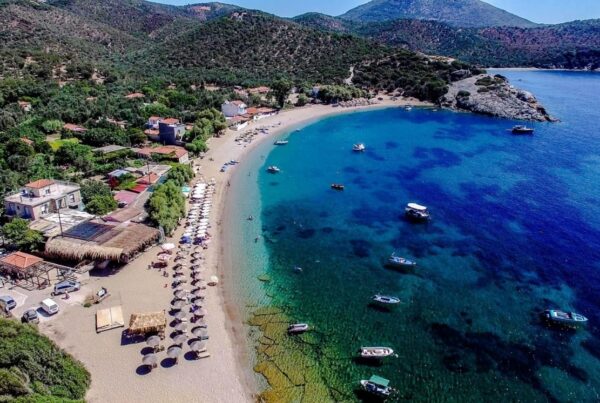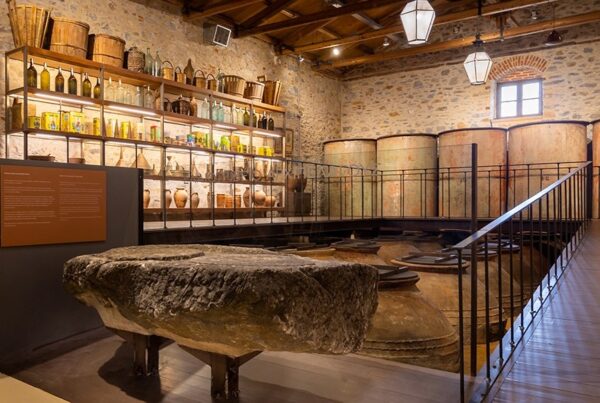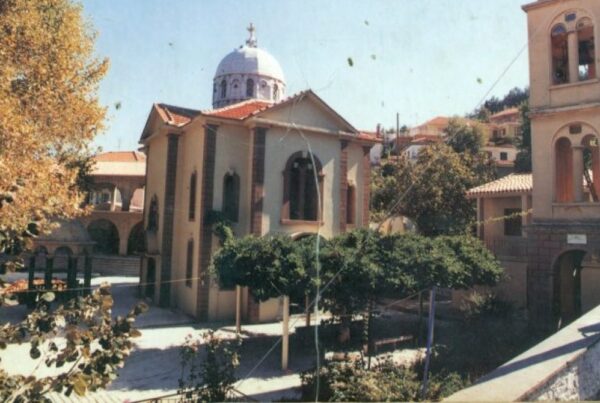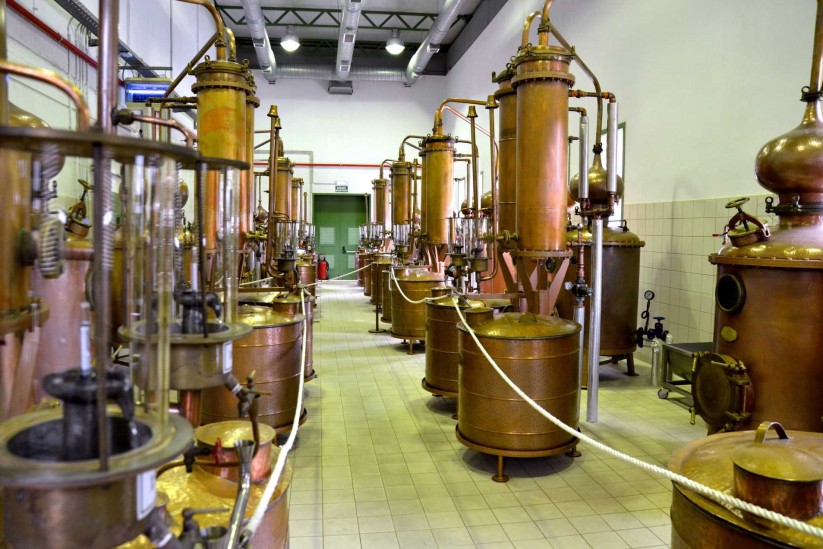

The history of ouzo is deeply intertwined with the town of Plomari on the island of Lesvos. While the spirit itself has roots in the Ottoman Empire as a simple tsipouro (a grape pomace distillate), Plomari transformed it into the world-famous drink we know today.
The Rise of Plomari as an Ouzo Capital
Ouzo production in Plomari dates back to the mid-19th century. At that time, the town was a bustling port and commercial center with access to pure spring water from the nearby Mount Olympus (of Lesvos). This combination of clean water and a strong merchant class with ties to Anatolia created the perfect conditions for the industry to flourish.
The defining characteristic of Plomari ouzo is the use of high-quality ingredients and a specific, meticulous distillation process. The producers utilized local, aromatic aniseed and a variety of other herbs and seeds, such as fennel, star anise, mastic, and even cinnamon, to create a complex and balanced flavor. The quality of the water was also considered a crucial element.
Key Distilleries and the Legacy
The first large-scale ouzo distillery in Plomari was founded in 1894 by Isidoros Arvanitis. His vision and dedication to quality laid the groundwork for the brand “Ouzo of Plomari,” which remains one of the most recognized and exported ouzo brands today.
Other notable producers, such as Giannatsis, also contributed to Plomari’s reputation, each with their own unique recipes and secret blends. The competition among these distillers spurred innovation and ensured a consistently high standard of quality.
By the 20th century, Plomari had firmly established itself as the Ouzo Capital, with its distilleries supplying ouzo not only to the rest of Greece but also to the global market. The tradition of an ouzo “factory” in Plomari is a testament to this legacy. The spirit is not just a drink; it’s a symbol of the town’s history, culture, and craftsmanship.