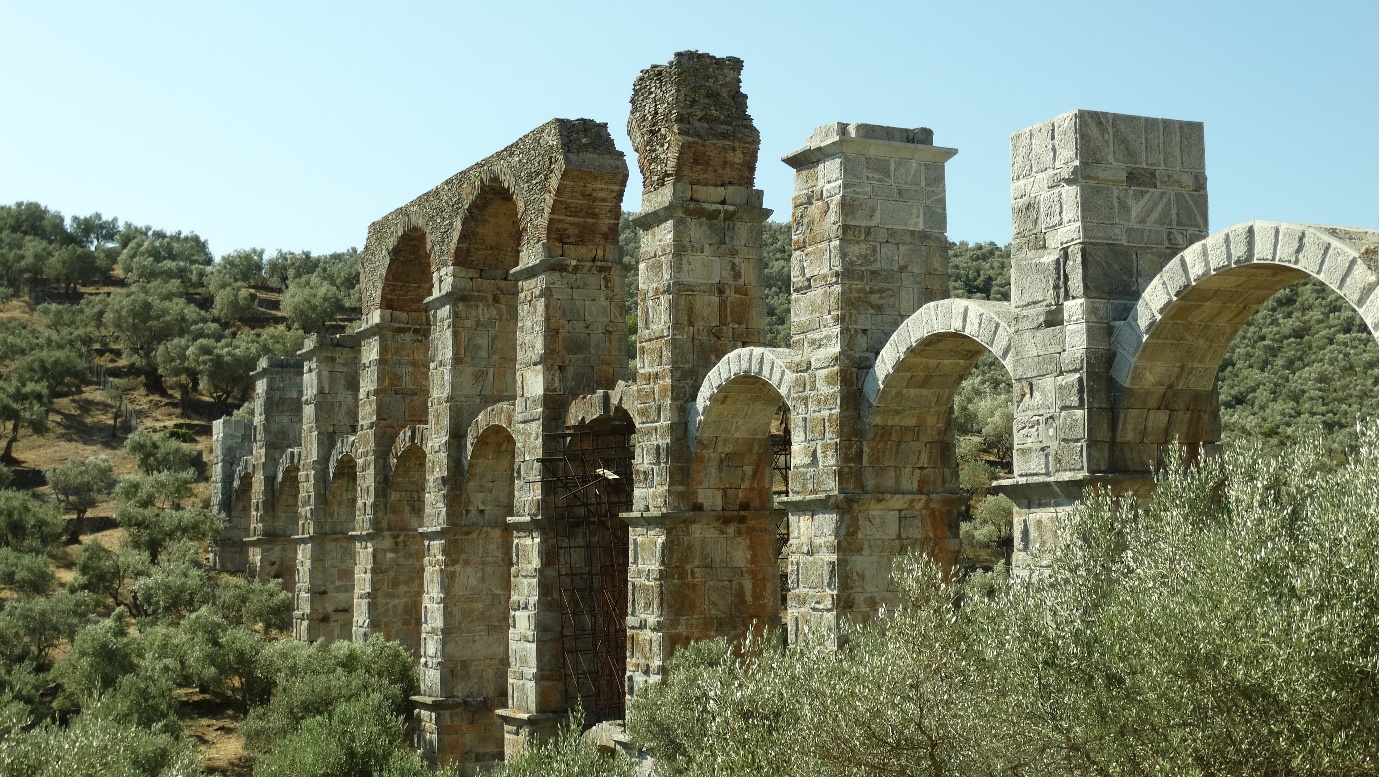

The Roman aqueduct on the island of Lesbos, also known as the Roman Aqueduct of Moria, is one of the most important ancient engineering projects on the island. It was built in the late 2nd or early 3rd century AD to transport water from Mount Olympus to the ancient city of Mytilene, covering a distance of 26 kilometers.
The aqueduct’s design was an impressive feat of engineering, as it was able to manage the varying terrain and elevations. It included underground conduits, channels carved into rocks, and monumental arched bridges to ensure a continuous and steady flow of water. The most impressive remaining section is a three-tiered bridge near the village of Moria, with a length of 170 meters and a height of 24.46 meters.
The aqueduct’s construction highlights the technical skill of the Romans, who used their knowledge of hydraulics and materials to create a system that could supply a large daily volume of water to the city’s fountains, public baths, and private homes.